


Factory Free sample Brand 4, 4′- (1-Methylethylidene) Bisphenol/Bisphenol a 80-05-7
Assume full accountability to satisfy all demands of our consumers; reach ongoing advancements by endorsing the expansion of our purchasers; come to be the final permanent cooperative partner of clients and maximize the interests of clientele for Factory Free sample Brand 4, 4′- (1-Methylethylidene) Bisphenol/Bisphenol a 80-05-7, If needed, welcome to make contact with us by our web page or phone consultation, we will be delighted to serve you.
Assume full accountability to satisfy all demands of our consumers; reach ongoing advancements by endorsing the expansion of our purchasers; come to be the final permanent cooperative partner of clients and maximize the interests of clientele for , now we have all day online sales to make sure the pre-sale and after-sale service in time. With all these supports, we can serve every customer with quality product and timely shipping with highly responsibility. Being a young growing company, we might not the best, but we’re trying our best to be your good partner.
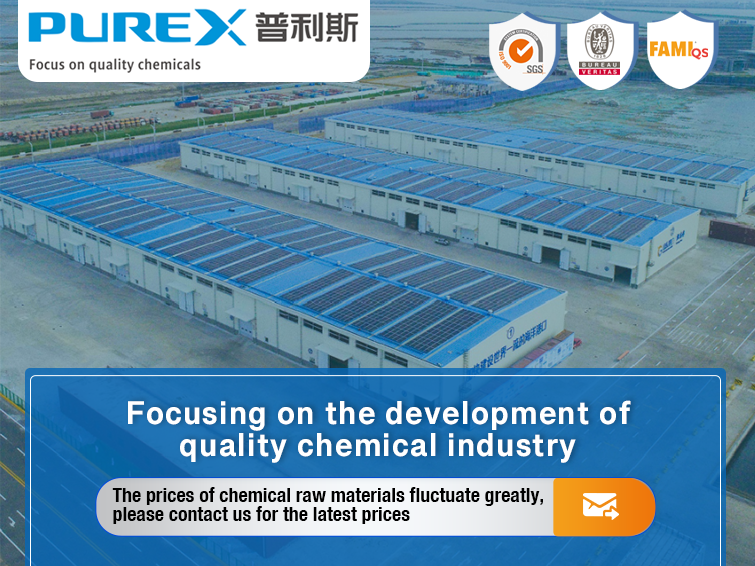
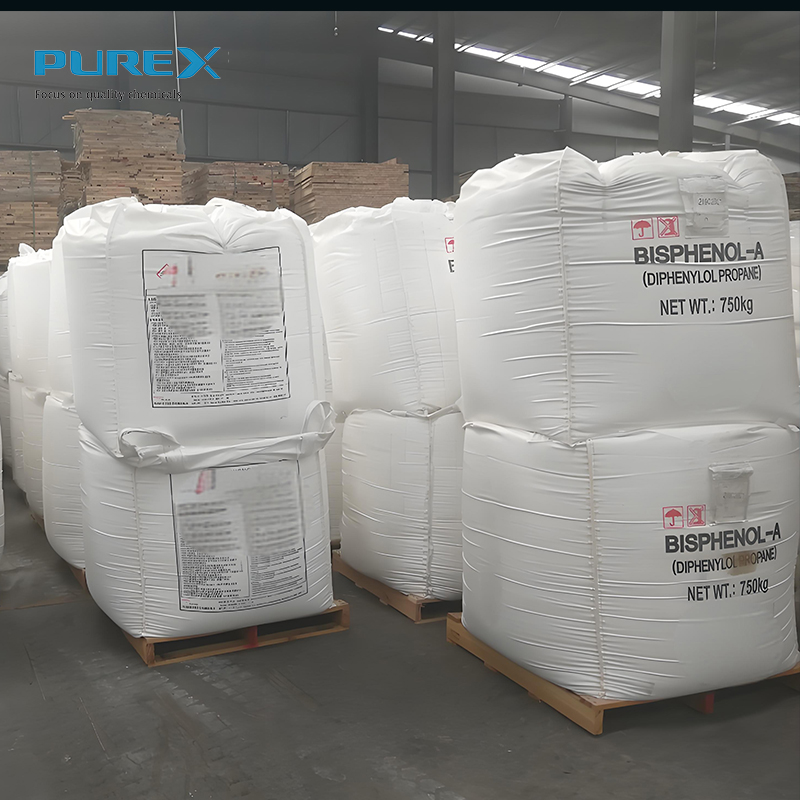
The storage conditions for bisphenol A should revolve around the core objectives of “preventing deterioration, ensuring safety, and avoiding environmental impact”.
Uses of Bisphenol A (BPA)
Bisphenol A (BPA) is an essential raw material for the synthesis of polycarbonates, epoxy resins, and high-temperature resistant polyesters. It is also used as a PVC stabilizer, plastic antioxidant, UV absorber, fungicide, etc.
As a versatile compound, BPA is extensively employed in the production of epoxy resins, polycarbonates, polyester resins, polyphenylene ether resins, and polysulfone resins. Additionally, it serves as a stabilizer for polyvinyl chloride (PVC), an antioxidant in plastics, a UV absorber, an agricultural fungicide, and an anti-aging agent in rubber.
It is also utilized as an antioxidant and plasticizer in paints and inks. In organic synthesis, BPA acts as a key ingredient for manufacturing epoxy and polycarbonate resins, and it is widely applied as an important raw material for high-molecular synthetic compounds, as well as in anti-aging agents, plasticizers, and agricultural fungicides.
1. Delivery Reliability & Operational Excellence
Key Features:
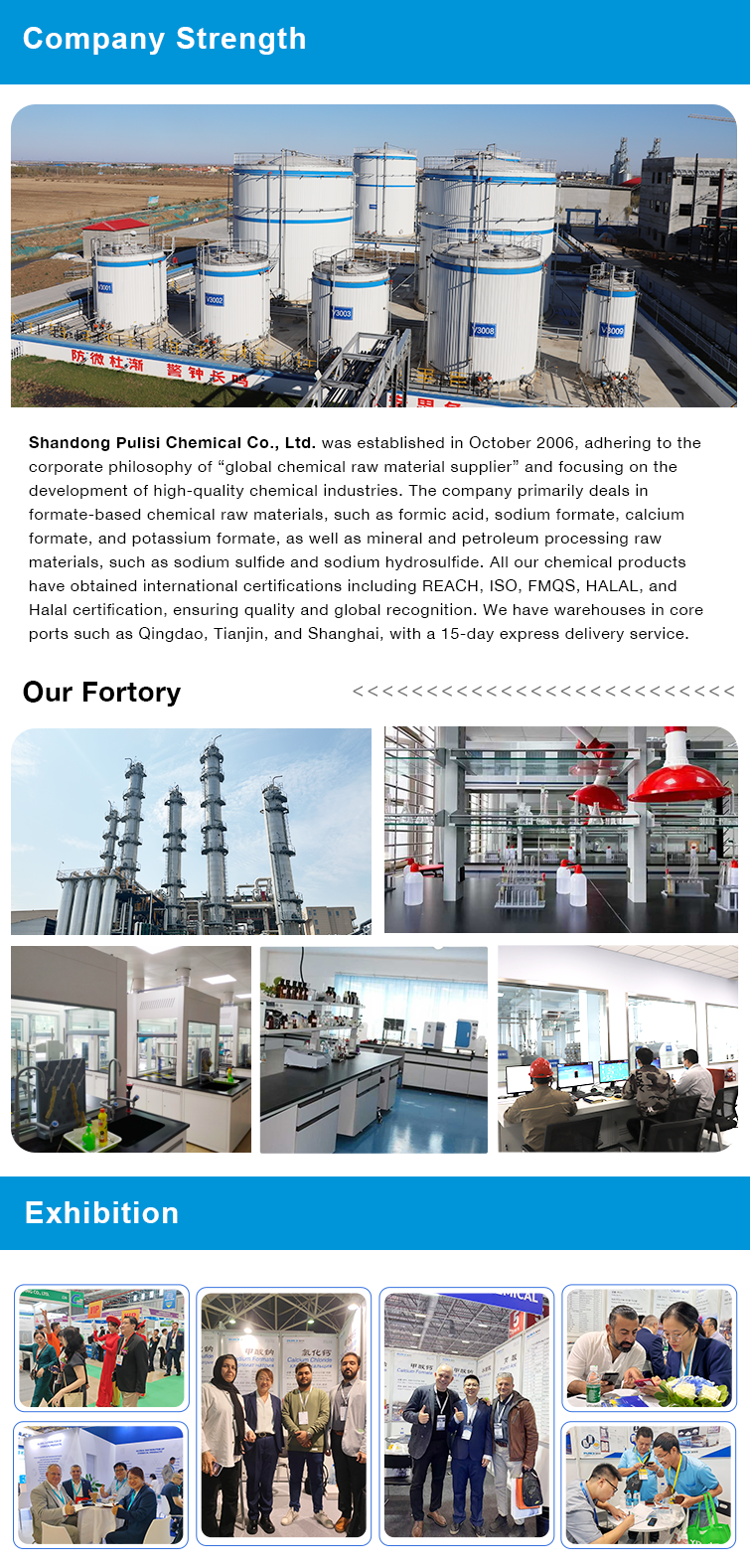
Strategic inventory hubs at Qingdao, Tianjin, and Longkou port warehouses with 1,000+
metric tons of stock available
68% of orders delivered within 15 days; urgent orders prioritized via express logistics
channel (30% acceleration)
2. Quality & Regulatory Compliance
Certifications:
Triple-certified under REACH, ISO 9001, and FMQS standards
Compliant with global hygiene regulations; 100% customs clearance success rate for
Russian imports
3. Transactional Security Framework
Payment Solutions:
Flexible terms: LC (sight/term), TT (20% advance + 80% upon shipment)
Specialized schemes: 90-day LC for South American markets; Middle East: 30%
deposit + BL payment
Dispute resolution: 72-hour response protocol for order-related conflicts
4. Agile Supply Chain Infrastructure
Multimodal Logistics Network:
Air freight: 3-day delivery for propionic acid shipments to Thailand
Rail transport: Dedicated calcium formate route to Russia via Eurasian corridors
ISO TANK solutions: Direct liquid chemical shipments (e.g., propionic acid to
India)
Packaging Optimization:
Flexitank technology: 12% cost reduction for ethylene glycol (vs. traditional drum
packaging)
Construction-grade calcium formate/Sodium Hydrosulfide:Moisture-resistant 25kg woven PP bags
5. Risk Mitigation Protocols
End-to-End Visibility:
Real-time GPS tracking for container shipments
Third-party inspection services at destination ports (e.g., acetic acid shipments to South Africa)
After-Sales Assurance:
30-day quality guarantee with replacement/refund options
Complimentary temperature monitoring loggers for reefer container shipments
Bisphenol a bpa Acid-Catalyzed Process
In the acid-catalyzed process, the catalysts are usually sulfuric acid, hydrochloric acid, or hydrogen chloride gas.
The process using sulfuric acid as a catalyst has a simple flow, is produced in a single kettle, operates intermittently, does not require phenol recovery, and has low investment. However, it has many by-products, poor bisphenol A bpa quality, high consumption, large amounts of three wastes (waste gas, waste water, and solid waste), severe equipment corrosion, and low yield. The sulfuric acid method was eliminated overseas in the 1960s.
The method using hydrochloric acid or hydrogen chloride gas as a catalyst is called the hydrochloric acid method. The hydrochloric acid method has a mature production process and can be produced intermittently or continuously. The consumption of raw materials and public engineering is low, and the product can reach high quality after refining, which is used in the production of polycarbonate. Due to the strong corrosiveness of hydrochloric acid, the material requirements for equipment, pipelines, and instruments are high, so the investment and maintenance costs are high. Like the sulfuric acid method, the three wastes are serious. The hydrochloric acid process was the main production method in the world in the 1970s and 1980s.
Products categories
-

Good Quality Glacial Acetic Acid 99.8% CAS No. ...
-
Supply ODM Sodium Lauryl Ether Sulphate 70% SLE...
-
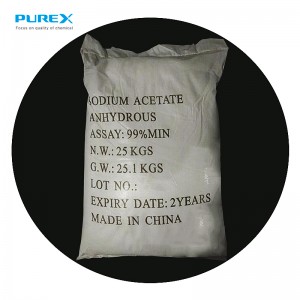
IOS Certificate Acetic Acid Sodium Salt Sodium ...
-
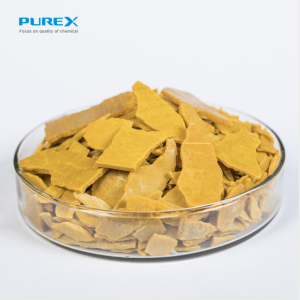
Factory directly Mine / Tannery Nahs Yellow Fal...
-
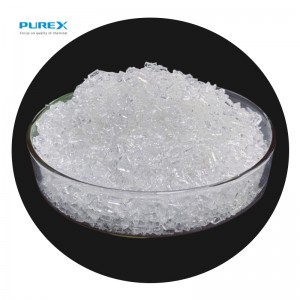
Wholesale ODM Industrial Grade 99% Sodium Thios...
-

High Quality Factory Fast Delivery Bulk Oxalic ...