
Key Control Factors in Bisphenol A Production
In terms of raw material purity, phenol and acetone, as the main raw materials for bisphenol A production, need strict control over their purity. The purity of phenol should not be less than 99.5%, and the purity of acetone should reach more than 99%. High-purity raw materials can reduce the interference of impurities on the reaction and ensure the smooth progress of the reaction.
The control of reaction temperature is crucial. The condensation reaction temperature is generally between 40 – 60°C. Within this temperature range, the reaction rate and product selectivity can reach a good balance. Temperatures that are too high or too low will affect the yield and quality of bisphenol A BPA. The activity and selectivity of the catalyst determine the reaction direction. Commonly used acidic catalysts such as sulfuric acid require precise deployment of their concentration and dosage. Generally, the concentration of sulfuric acid fluctuates within a certain range, and the dosage is a specific proportion of the total amount of raw materials, so as to ensure the catalyst exerts its best performance. Reaction pressure also affects bisphenol A BPA production. The appropriate pressure range is 0.5 – 1.5 MPa. A stable pressure environment helps maintain the stability of the reaction system and promotes mass transfer and reaction progress. The material ratio is directly related to the reaction efficiency. The molar ratio of phenol to acetone is usually controlled at 2.5 – 3.5:1. A proper ratio can make the raw materials react fully, increase the yield of bisphenol A BPA, and reduce by-products.
Bisphenol A BPA modification enhances mechanical strength, scratch and wear resistance, ready to tackle demanding challenges.
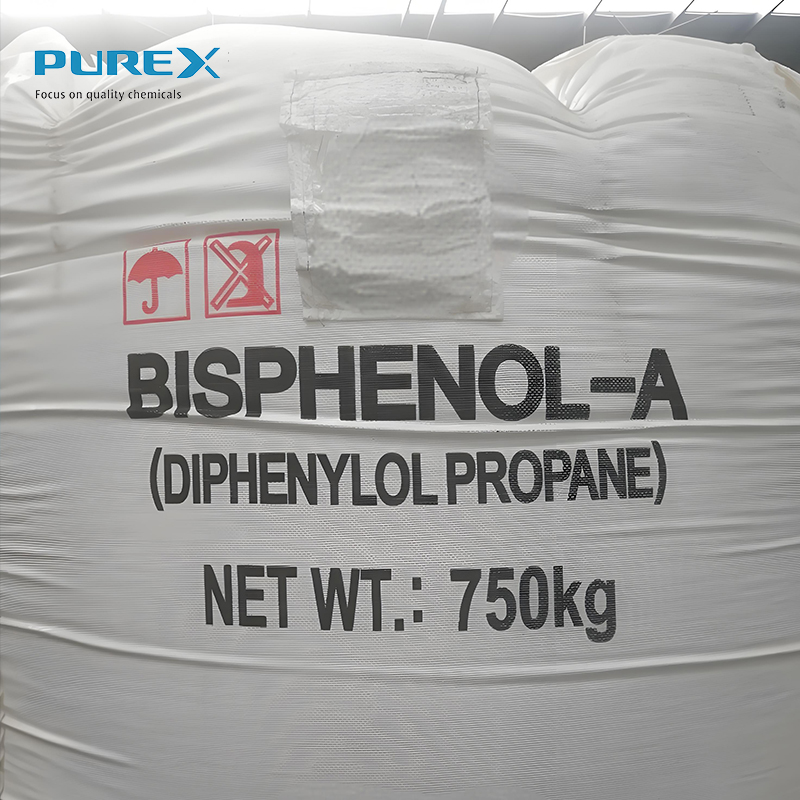
If you want to buy reliable chemical products, please look for Shandong Pulisi Chemical Co., Ltd., which focuses on “quality chemical” and has been operating for 20 years.
Post time: Oct-29-2025